Search

Amiah Kwanprayoon

Welcome to my world

Month

October 2015

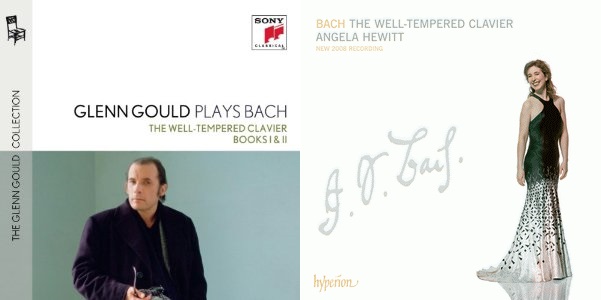
The Different Approaches of the Performance between Glenn Gould and Angela Hewitt

Appearing commonly in baroque period, the early keyboard instruments such as harpsichord, clavichord and virginal were widely used for many music compositions. Nonetheless, after classical period, piano has become more important because it can make the sound louder or softer and more vibrate. Moreover, the mechanisms between piano and Baroque keyboards are not similar, so the technique of playing is also different.

The question is how can we express and articulate the music in Baroque as the composers definitely did not write any dynamics or articulations? Although there are many ways to create the sound, musicians need to analyse and express by their own imagination and experience base on that period style. For example, the prelude and fugue No. 1 in C Major BWV 870, even Glen Gould and Angela Hewitt, both of them performed differently.

Glenn Gould was a Canadian pianist (25 September 1932 – 4 October 1982), he powerfully created the Baroque music style with very clear articulation. Even though he did not do noticeable dynamics, the sound in each voice came out completely distinct with polyphonic texture. In this fugue, he projected semi quavers throughout which leads the music to the true feeling of harpsichord sound. Furthermore, the tempo quite stayed the same except at the end. It would be reasonable to conclude that Baroque music can be truly perceived by the performance of Glenn Gould.

Nevertheless, music is not being strict and it can be more freedom. Angela Hewitt is a Canadian pianist, born on July 26, 1958; she also works on many Bach’s music. She shows a new style of playing Bach’s music in this century by playing expressively. In addition, making this prelude and fugue more interesting, Angela does a lot of dynamic directions and phrases every sentence emotionally. Her articulation is smoother than Gould but it is full of liveliness. Attractively, she takes time in each section of this fugue, so the structure is clearly divided.

It appears that there is no rule for playing music, seeing that the new generation of musicians creates baroque music as romantic style. However, it is necessary to explicitly understand the period and history because every single piece has their own origins. If musicians have enough experiences and reasons, there is no right or wrong of playing.

The Relationship between the Prelude and the Fugue

Bach: The Well-Tempered Clavier Book 2 – Prelude & Fugue No. 1 C Major BWV 870

Johann Sebastian Bach created the keyboard composition which is known as “The Well-Tempered Clavier” (WTC). It was formed of 2 books of preludes and fugues in 24 major and minor keys as in total of 48 preludes and fugues in order of 12 semitones from C to B. This essay will analyse the relationship between the Prelude & Fugue no. 1 in C Major BWV 870 WTC II. It is generally accepted that this music takes an important part in Bach’s work since it is the first composition of WTC II.

To begin with the prelude, it consists of four voices: soprano, alto, tenor and bass with an improvisation style. Grey claimed that “whereas the latter is in the nature of an improvisation upon a pattern figure which is rigorously maintained throughout, the present example is very much freer and subtler in form and procedure.”[1] Although in Baroque period, there was only basso continuo with a free creation of melody by music players, the preludes of Bach were written with flexibility structure. Furthermore, Grey said that the preludes in WTC II have many differences from the first set because they have a greater connection that will lead to the ensuring fugues[2]. For example, the subject in this prelude is involved around F instead of G which will certainly end with C, while the first preludes in WTC I have more independence of the fugues. Therefore, it can be argued that this prelude is truly an introduction of the Fugue.

On the other hand, the form of the fugue has a very formal structure. It is divided in 3 sections: an exposition, a development, and a recapitulation. Having 3 voices, the fugue in C major WTC II starts with the main theme “subject”, followed by counter-subject. Bruhn claims that “with its length of four bars, divided by a rest exactly in its middle, the subject of the C major fugue reveals a very regular phrase structure.”[3] In addition, the subject will be imitated in 3 different voices.

In conclusion, it can be seen that the prelude is essentially introducing to the fugue. It shows an idea of improvisation style relating to the fugue, while the fugue has a strict structure. Moreover, the tempo and the emotion between this prelude and fugue are also different. Being slower and more expressive, the prelude makes the fugue be more exciting.

References

1 Bruhn, Siglind (2003), ‘J.S. Bach’s Well-Tempered Clavier In-depth Analysis and Interpretation’, accessed Oct 6, 2015, http://www-personal.umich.edu/~siglind/wtc-ii-01.htm.

2 Gray, Cecil.The forty-eight Prelude and Fugue of J. S. Bach: Prelude and Fugue (three parts) in C major, Oxford, Oxford University Press, 1938.

[1] Cecil Gray, The forty-eight Prelude and Fugue of J. S. Bach: Prelude and Fugue (three parts) in C major (Oxford, Oxford University Press, 1938), 82.

[2] Ibid., General Observation, 80.

[3] Siglind Bruhn(2003), J.S. Bach’s Well-Tempered Clavier In-depth Analysis and Interpretation, accessed Oct 6, 2015, http://www-personal.umich.edu/~siglind/wtc-ii-01.htm.

Blog at WordPress.com.

Up ↑